ORPO is a fine-tuning technique that streamlines the process of adapting LLMs to specific tasks. It addresses a limitation of the traditional two-stage approach. While SFT effectively adapts the model to a desired domain, it can inadvertently increase the probability of generating undesirable responses alongside preferred ones.
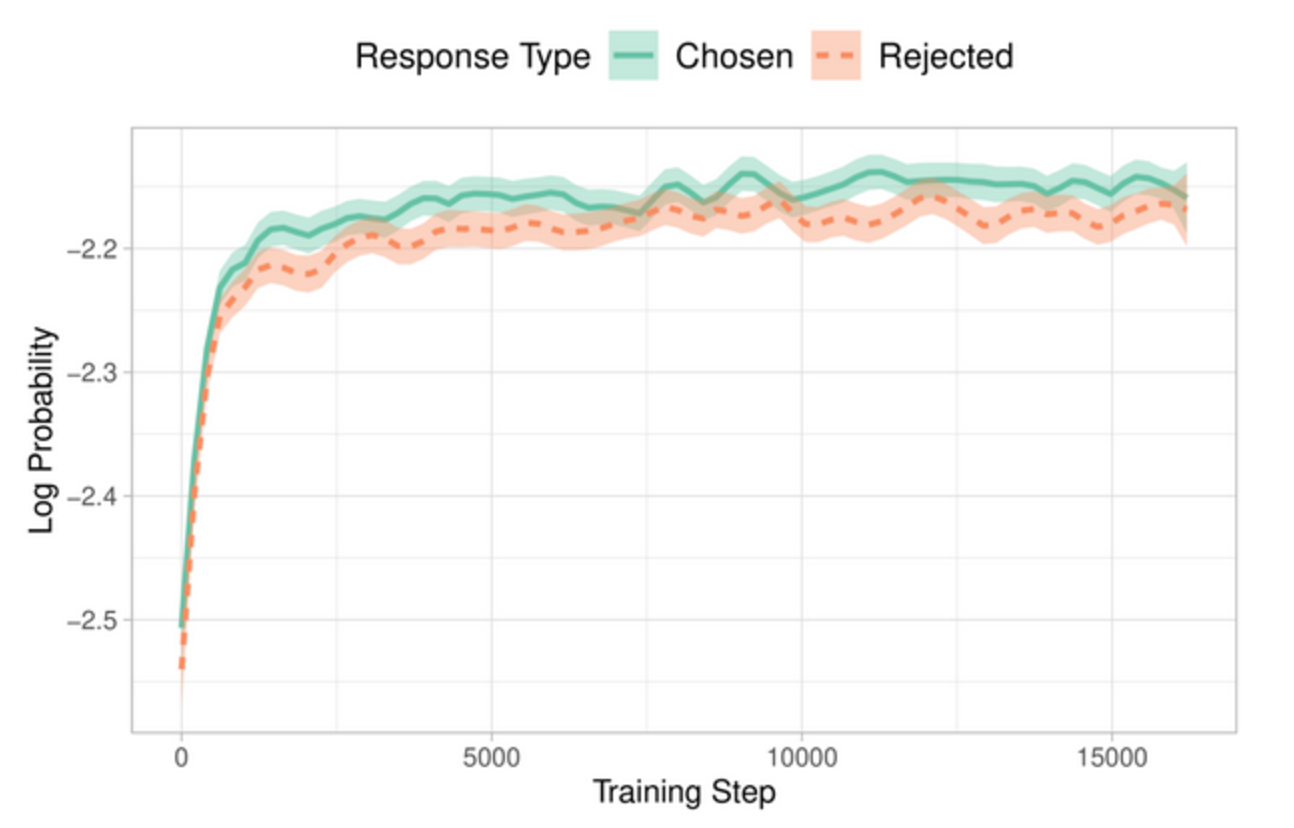 Preference alignment is employed to address this issue. It aims to:
- Increase the likelihood of generating preferred responses.
- Decrease the likelihood of generating rejected responses. Reinforcement Learning with Human Feedback (RLHF) or Direct Preference Optimization (DPO) solves the problem using a separate reference model, increasing computational complexity, while ORPO combines SFT and preference alignment into a single objective function. It modifies the standard language modeling loss by incorporating an odds ratio (OR) term. This term:
- Weakly penalizes rejected responses.
- Strongly rewards preferred responses.
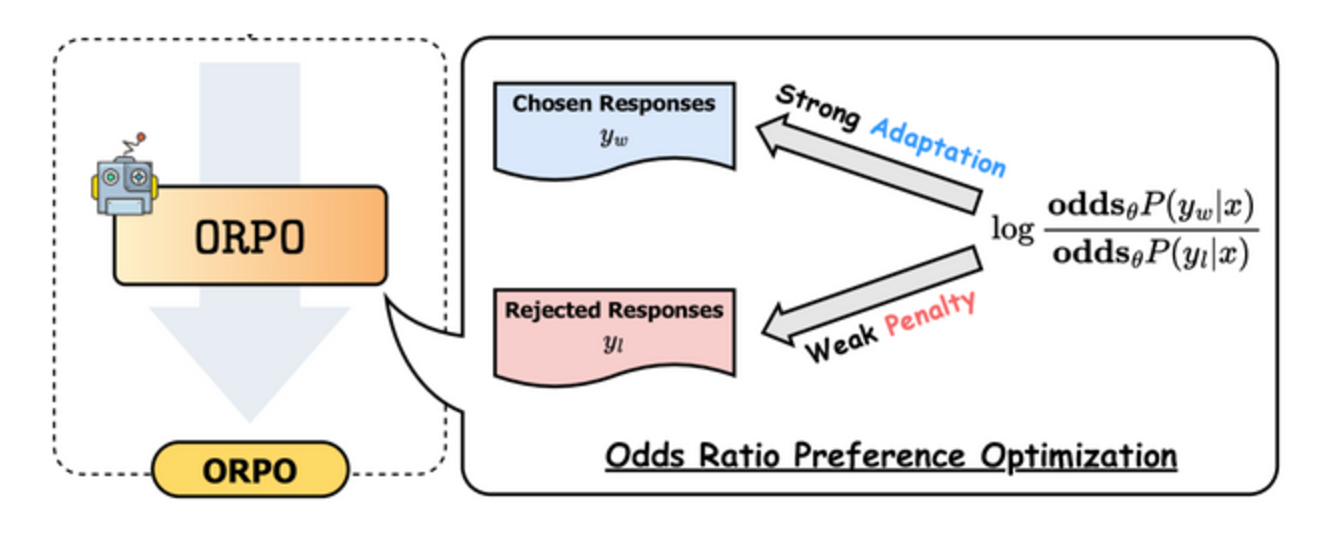 By simultaneously optimizing for both objectives, ORPO allows the LLM to learn the target task while aligning its outputs with human preferences.