Advertising marketplace players are the companies or systems that take part in buying, selling, rendering, measuring, and reporting ads.
RunCo can buy ads through different market structures. It can buy inside Pinterest Ads, where Pinterest owns the surface and marketplace. It can also buy open-web inventory through a demand-side platform (DSP), where publishers, sell-side platforms (SSPs), exchanges, and measurement vendors each own part of the path.
Inventory means the ad opportunities a seller can offer: feed slots, article placements, video breaks, app screens, or commerce placements. Onsite inventory is inventory on the surface owner’s own product, such as a promoted card in a platform feed or an ad slot on a publisher’s article page. Offsite inventory is the same idea viewed from a buyer-side system that does not own the surface, such as a DSP bidding for a publisher article slot. Exchanges are marketplace layers that route seller-side opportunities to buyers, collect bids, and return the selected buyer or auction result.
Walled garden means one company owns the user surface and most of the ad system around it. Open-web programmatic means automated buying and selling across companies using bid requests, bid responses, routing, and auction rules.
Actors
These actor names are used throughout the advertising notes. The important distinction is which company controls which part of one ad opportunity, because ownership determines who can filter, price, measure, and dispute the result.
| Term | Meaning | RunCo example |
|---|---|---|
| Advertiser | Company paying to reach users. | RunCo funds a sneaker campaign. |
| Surface owner | Company that owns the user experience where the ad can appear. | Pinterest owns the feed; a news publisher owns its article page. |
| Publisher | Surface owner selling ad inventory, usually used in open-web contexts. | A news site selling a sidebar slot. |
| Onsite inventory | Ad opportunities on the surface owner’s own product. | A promoted card in a platform feed; a publisher’s article slot from that publisher’s perspective. |
| Offsite inventory | Ad opportunities viewed from a buyer-side system that does not own the surface. | RunCo’s DSP bids for a slot beside a publisher article. |
| Demand-side platform (DSP) | Buyer-side system that evaluates ad opportunities and bids for advertisers. | The Trade Desk bidding for RunCo. |
| Sell-side platform (SSP) | Seller-side system that packages publisher inventory and routes it to buyers. | Magnite or PubMatic selling a publisher slot. |
| Exchange | Marketplace layer that receives seller-side ad opportunities, forwards them to buyers, collects bids, and returns the selected buyer or auction result. | OpenX or another exchange path. |
| Measurement party | Platform, advertiser, or third party that records delivery quality or downstream outcomes. | Pinterest reporting, RunCo backend purchases, DoubleVerify viewability checks, AppsFlyer installs. |
| Bid request | Message describing one ad opportunity: publisher, placement, size/format, floor price, device, privacy flags, and allowed context. | SSP/exchange asks DSPs whether they want to bid for the article slot. |
| Bid response | Buyer answer to a bid request: bid price, creative or creative reference, buyer identity, and tracking/billing fields. | The Trade Desk returns RunCo’s bid or returns no-bid. |
RunCo is the buyer in both examples below. The market structure changes who can see the request, who prices the ad slot, who renders the creative, and whose numbers RunCo can audit.
One Company Can Have More Than One Role
A walled platform is walled for the inventory it owns. Pinterest is a walled platform when the opportunity is a promoted card in Pinterest feed, because Pinterest owns the surface, creates the slot, runs the serving path, controls the render path, and reports the result.
The same company can also run buyer-side systems for offsite inventory. In that case, the user is on another publisher’s page or app. The publisher or its SSP creates the opportunity, an exchange path sends a bid request, and the buyer-side system decides whether one of its advertisers should bid. The company may still use its advertiser objects, budgets, prediction models, and measurement data, but it does not own the page or app where the ad appears.
Marketplace role is per opportunity. A company is a walled platform for inventory it owns. If that same company also operates a buyer-side product, it can be a bidder for inventory owned by another publisher. Do not infer the second role from the first; it depends on the company’s actual ad products.
Two Ways To Buy The Same Ad
The diagram compares ownership boundaries. The left path shows a walled platform where one company owns the surface and most ad systems; the right path shows open-web programmatic, where buyer, seller, exchange, and measurement responsibilities split across companies. Message order appears in the trace sections.
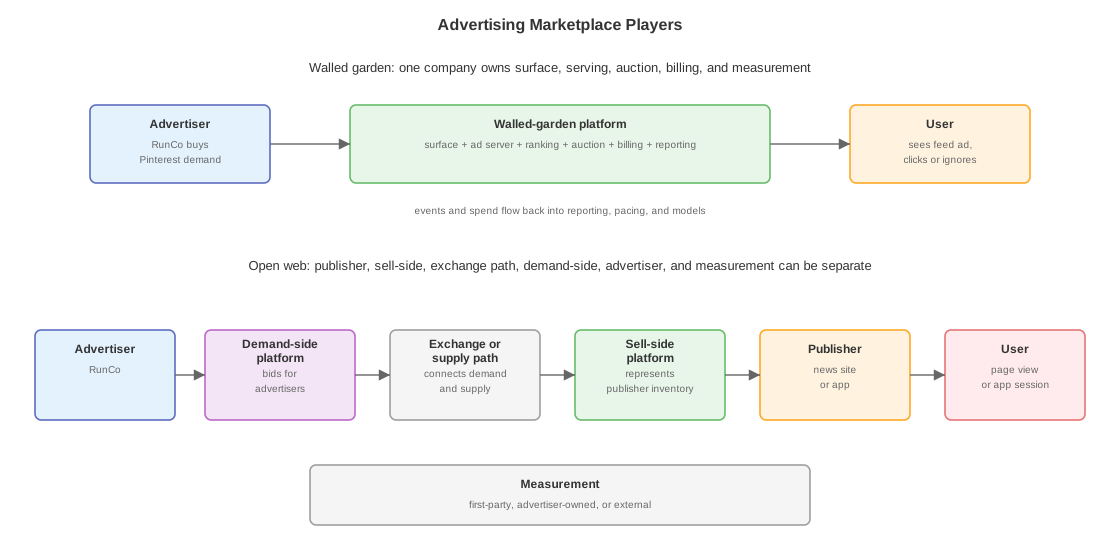
In a walled-garden platform, the company that owns the user surface also runs most of the ad stack. Pinterest Ads is the simple example: Pinterest owns the feed, advertiser control plane, ad server, internal auction, render path, billing, policy review, and platform reporting.
In open-web programmatic advertising, the publisher and buyer usually meet through intermediaries. RunCo might buy through The Trade Desk, a demand-side platform (DSP): software that receives ad opportunities and decides whether to bid for advertisers. A news site may sell through Magnite or PubMatic, sell-side platforms (SSPs): systems that package publisher inventory and route it toward buyers. An exchange receives those seller-side opportunities, sends bid requests to buyer-side systems, collects bid responses, and returns the selected buyer or auction result.
Measurement can sit outside either market shape. DoubleVerify or Integral Ad Science (IAS) may verify viewability and fraud signals; viewability means whether enough of the ad was visible for long enough to satisfy the measurement rule. AppsFlyer or Adjust may attribute app installs and in-app purchases; attribution means assigning reporting credit to earlier ad touchpoints. RunCo may also send its own purchase stream from its backend. These parties affect reporting, attribution, billing disputes, and optimization inputs after serving.
Walled-Garden Platform
RunCo creates a campaign in Pinterest Ads. A user opens the Pinterest home feed. Pinterest decides which ads qualify, ranks them, prices the opportunity through its internal auction, inserts the chosen creative, records impressions and clicks, charges RunCo under Pinterest’s billing rules, and reports performance back to RunCo.
RunCo can send purchase events back to Pinterest through a server-side conversion endpoint. Pinterest uses those events for optimization and reporting. RunCo can also compare Pinterest’s report against its own commerce analytics, which may count purchases differently because match rules, attribution windows, deduplication, and privacy filtering differ.
These platforms are walled gardens because the company selling ads also owns the user surfaces listed here.
| Platform | Owned surface | Typical ad products |
|---|---|---|
| Pinterest Ads | Pinterest feed, search, related pins | Shopping, conversion, traffic, awareness campaigns |
| Google Ads on Google surfaces | Search, YouTube, Gmail, Discover | Search, video, app, shopping, performance campaigns |
| Meta Ads | Facebook, Instagram, Messenger, Threads placements | Feed, stories, reels, lead, conversion campaigns |
| TikTok Ads | TikTok feed and video placements | In-feed video, app install, shopping, conversion campaigns |
Open-Web Programmatic
A news site owns the page and wants to sell an ad slot beside an article. The publisher’s SSP packages the slot with context such as placement, size, floor price (minimum acceptable price), device, privacy flags, and broad user or content signals. The exchange path sends the opportunity to DSPs. Each DSP decides whether one of its advertisers should bid. The publisher renders the winning creative.
| Actor | Example | Role in one opportunity |
|---|---|---|
| Advertiser | RunCo | Funds the campaign and chooses business goals, budget, targeting, creative, and measurement setup. |
| Demand-side platform (DSP) | The Trade Desk | Evaluates bid requests for advertisers and returns bid responses. |
| Exchange | OpenX or another exchange path | Connects SSP supply to DSP demand and runs or coordinates auction routing. |
| Sell-side platform (SSP) | Magnite, PubMatic | Packages publisher inventory, applies floors or blocks, and routes opportunities toward buyers. |
| Publisher | News site or app developer | Owns the page, app screen, video break, or feed slot where the ad can render. |
| Measurement party | DoubleVerify, IAS, AppsFlyer, Adjust, advertiser conversion stream | Verifies delivery quality or supplies outcome events used in reporting and attribution. |
| User | Reader or app user | Creates the ad opportunity by opening the surface and may later click, engage, or convert. |
Open-Web Trace
This trace follows one article-page ad slot through the open-web path. It is the ownership version of the request lifecycle: the publisher starts with a slot to sell, intermediaries route the opportunity, a DSP answers for advertisers, and later event streams provide measurement and billing evidence.
- The user opens the article page.
- The publisher exposes an ad slot through its SSP.
- The SSP sends a bid request through an exchange path.
- A DSP checks advertiser campaigns and returns a bid or no-bid.
- The exchange path selects a winner.
- The publisher renders the winning creative.
- Trackers, billing notices, clicks, and conversion streams record later outcomes.
A DSP timeout removes that buyer from this auction. The publisher loses one possible bidder, the advertiser loses one possible impression, and the DSP’s logs overrepresent the opportunities it processed quickly enough to answer.
Questions To Ask When Reading Reports
Use these questions when a report number looks surprising. They force the report back to the actor that produced the request, price, event, or attribution claim.
| Question | What it tells you |
|---|---|
| Who owns the user surface? | Which company controls ad load, placement rules, and the user experience around the ad. |
| Who buys for the advertiser? | Where campaign retrieval, bid logic, budget checks, and frequency checks happen. |
| Who sells for the publisher? | Where floors, category blocks, inventory packaging, and routing choices happen. |
| Who runs the auction path? | Which system controls price formation, timeouts, winner selection, and auction logs. |
| Who reports the number? | Whether the metric came from the platform, advertiser backend, third-party verifier, or attribution provider. |
Sources
- The Trade Desk demand-side platform
- Magnite sell-side advertising company
- PubMatic sell-side platform
- OpenXExchange
- OpenRTB 2.6 Specification